

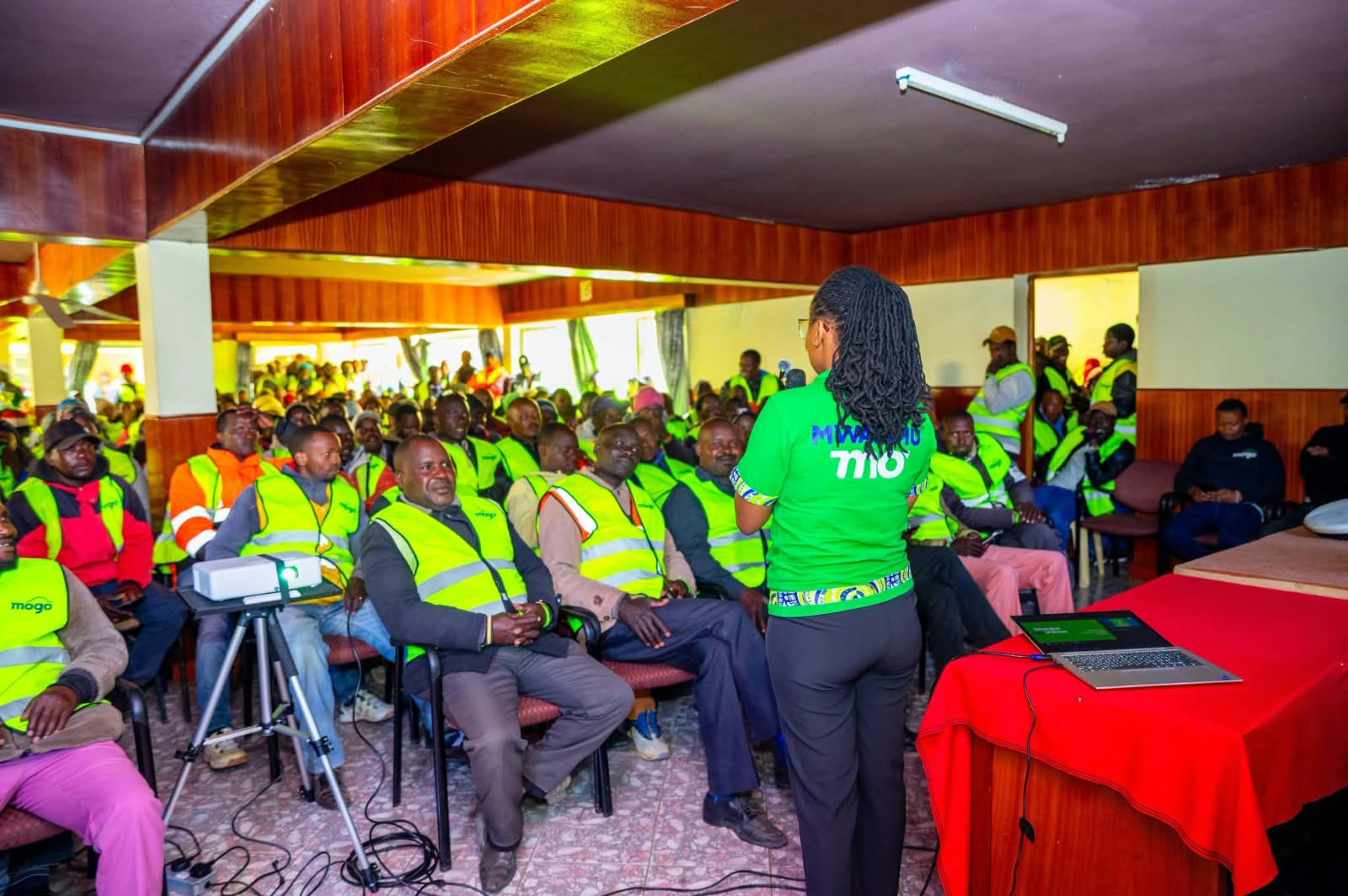
Narok, Kenya, 30th September 2026: More than 800 boda boda riders in Narok County are today receiving financial literacy training aimed at helping them manage their income, meet loan obligations and protect their livelihoods.
The training, organised by Mogo Kenya in partnership with the Boda Boda Association of Kenya (BAK), is part of a wider financial literacy initiative that has reached boda boda operators across various counties in the Nyanza, Mt Kenya, Western, Eastern and Rift Valley regions.
The programme focuses on practical financial skills, including budgeting, cash-flow management, understanding loan agreements and planning for regular repayments. Riders are also being encouraged to communicate with their financiers early when they face challenges that could affect their ability to repay their loans, rather than allowing missed payments to accumulate.
For many boda boda operators, the motorcycle is more than a means of transport. It is their workplace and a source of daily income used to support families, pay school fees and meet other household needs.
Industry estimates indicate that of the about 2.4 million motorcycles in use in Kenya, 68.4 per cent are financed through digital and asset-based credit, making responsible borrowing an important part of sustainable motorcycle ownership.
The training comes amid continued pressure on borrowers. According to the Central Bank of Kenya’s Financial Sector Stability Report, the gross non-performing loan ratio in the banking sector stood at 15.6 per cent in March 2026.
The boda boda sector is estimated to generate about KES660 billion annually and support more than 2.5 million jobs. It also contributes about 4.4 per cent of Kenya’s GDP, according to industry estimates.
For Mogo, the focus on financial literacy is closely linked to protecting the economic role of motorcycles in the lives of riders.
“Behind every motorcycle we finance is a person who depends on that motorcycle to earn a living. It is their workplace, their business and, in many cases, the income that supports an entire family,” said Sheila Wangari, Events and Community Manager, Mogo.
“That is why we want to see riders succeed beyond acquiring the motorcycle. Understanding the cost of credit, managing daily income and planning for repayments can make a significant difference in keeping the motorcycle productive and the rider financially stable.”
Wangari said riders should not view their financier only as a source of credit, but also as a partner they can engage when their circumstances change.
“When a rider experiences a difficult month, the most important thing is not to remain silent. Speaking to the financier early creates an opportunity to understand the available options before a temporary setback becomes a bigger problem,” she said.
BAK President Kevin Mubadi said financial literacy was important for riders because of the central role motorcycles play in supporting their families.
“Our members depend on their motorcycles every day to earn a living and support their families. It is therefore important that they understand the financial commitments that come with motorcycle ownership and know what steps to take when they encounter difficulties,” he said.
Mubadi said the continued collaboration between riders, financiers and industry associations could help operators strengthen their financial management skills and make informed borrowing decisions.
The Narok County Boda Boda Chairman said financial education could help riders make better decisions about their earnings and borrowing, particularly given the day-to-day nature of their businesses.
“A boda boda rider earns and spends money every day, so without proper planning it is easy to use money meant for a loan repayment on other immediate needs. Training like this helps our members understand the importance of setting aside money for their obligations while still providing for their families,” he said.
He said riders also needed to understand their loan terms before taking financing and maintain communication with their financiers whenever they experienced challenges.
“Most riders want to keep working and paying their loans. What is important is having the knowledge to manage the business properly and seeking guidance early when income is affected,” he said.
The Narok training builds on financial literacy sessions conducted by Mogo Kenya and BAK in counties across Nyanza, Mt Kenya, Western, Eastern and Rift Valley, as the partners seek to equip more boda boda operators with the knowledge and skills needed to manage credit responsibly and sustain their businesses.
ABOUT MOGO
Mogo Kenya is a leading asset financing company expanding access to quality, affordable and flexible credit for motorcycles, cars and other income-generating transport solutions. The company enables individuals and small businesses to own productive assets, supporting thousands of Kenyans to build sustainable livelihoods through transparent, customer-focused financing.
The company is part of Eleving Group, a global FinTech operating in 17 countries across three continents. Backed by this international network, Mogo Kenya has built a strong nationwide presence with more than 90 branches, over 1,700 employees and partnerships with more than 2,200 dealers.
The business has also diversified into smartphone financing and check-off loans, broadening access to essential digital tools and structured credit solutions.