

The Association for Strengthening Agricultural Research in Eastern and Central Africa (ASARECA) has introduced an innovative artificial intelligence-powered tool designed to transform how climate-smart agriculture policies are developed across the region.
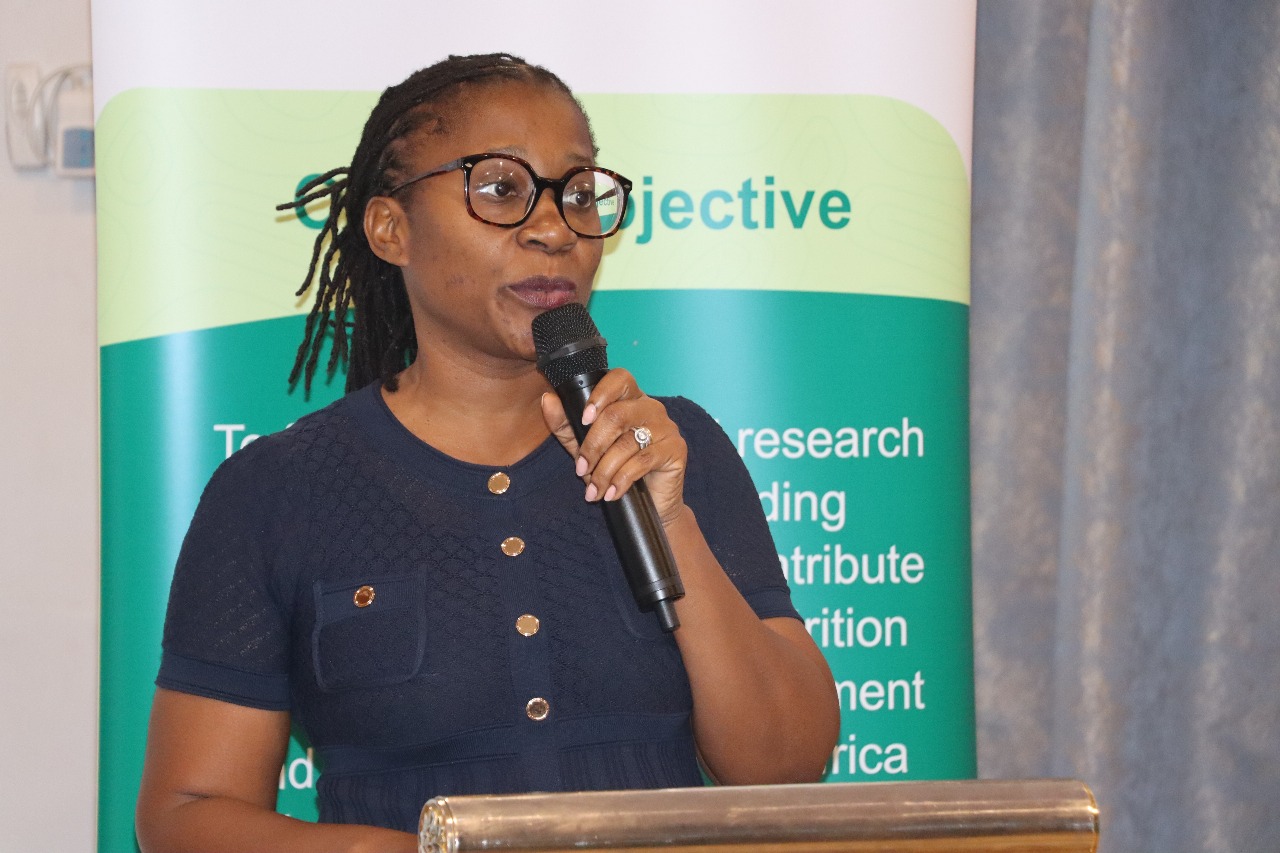
During a comprehensive training and validation workshop held in Nairobi, Kenya, from September 29 to October 4, 2025, stakeholders from governments, research institutions, NGOs, and the private sector were introduced to PEPA AI—a groundbreaking platform that promises to revolutionize policy analysis and development in the agricultural sector.
Addressing the Policy-Practice Gap
Jonathan Mockshell from the Alliance of Bioversity International and CIAT, working in collaboration with ASARECA, explained the critical challenge that PEPA AI seeks to address. “One of the big challenges affecting us currently is the potential to increase the adoption of agroecological practices, climate-smart agricultural practices, and regenerative agricultural practices,” he stated. “These innovations are often developed and scaled out in different places, but the institutional arrangements, the governance, the policies, and financing mechanisms to support the increase in adoption of these practices are often limited.”
The tool’s name, PEPA AI, stands for Political, Economic, and Policy Analysis, and is built on an artificial intelligence framework designed to rapidly generate insights that inform policy development. “Whereas we see technological innovations advancing, we see a limitation in terms of the enabling environment factors for increasing adoption. We developed this tool to fill that gap,” Mockshell explained.
Transforming Policy Development Timelines
Dr. Sylvester Dickson Baguma, Interim Executive Director of ASARECA, highlighted the transformative potential of PEPA AI in accelerating policy development. “We are looking at PEPA AI as a digital tool to help us in generating critical policies that can be used in implementing smart agriculture technologies,” he said. “We are used to a situation whereby we spend a lot of time collecting data to write something. But here, with the use of PEPA AI, we can quickly generate relevant policies.”
Dr. Baguma demonstrated how the tool can rapidly produce policy frameworks for implementing climate-smart agriculture technologies. “Within a little time, you can generate this. There’s a lot of data out there, but collecting it or getting it as one person may take you ages to assemble. But using PEPA AI, it’s able to look at all the various open-source data, bring that quickly into action, and generate a structure for you—whether it’s a policy brief, a report, or an article.”
He emphasized the tool’s accessibility to non-specialists. “You don’t have to be a policy analyst to develop a policy brief. You just know what sort of data you want and what it’s going to be used for. You plug in your question and your problem, then you generate the policy brief,” he noted.
Empowering Decision-Makers Across Sectors
The training brought together diverse stakeholders who will serve as champions for the tool’s adoption across Eastern and Central Africa. Mockshell explained the cascade effect: “By training them to be able to use the PEPA AI tool, they are able to determine which practices are important, but at the same time also what are the financing, what are the policies, what are the enabling environment factors that will help adoption of the practices. With these insights, they are able to support farmers to make better decisions with regards to CSA practices.”
Joab Osumba from the Agricultural Consortium in Kenya, which supports government policy on climate change adaptation and finance, expressed enthusiasm about the tool’s potential. “The PEPA AI tool is very interesting. We are excited to work with it. We are getting so much information. It is helping us understand that we don’t need to use our normal way of looking for information. It has cut that time by so much.”
Real-World Applications and User Experiences
Scovia Akot from Uganda’s Ministry of Water and Environment, whose work focuses on climate change adaptation and policy analysis, praised the tool’s user-friendly design. “This tool is a very good start. It gives you a quick way for analysis and insights, which is useful. You usually don’t have a lot of time to sit down and review papers and put together information, but this gives you a platform to start with—not just a platform, but something informative to help you engage with your stakeholders.”
She emphasized the tool’s accessibility. “One thing about this tool compared to others is that it’s very simple to use. In a few steps, I’m able to generate insights. I like the fact that using this tool is really very simple—you have a few stages to go through, and we don’t want it to be complicated.”
Salome Owuonda from Africa CSID, an organization working with marginalized communities on nutrition and climate change, highlighted how PEPA AI reduces research barriers. “It has been amazing learning about this technology. The fact that it uses datasets and AI computation aligns so much with our food systems work, making this more practical and giving us information we can use to inform policy at an economic scale.”
She noted the tool’s efficiency gains. “It helps with limiting human barriers, because to do the work on my own, I would look for documents and data aligned to what we want to see at the end of it. But that is not the case because we have the AI already integrated with data that you can use. It limits the number of hours that people need to put into creating and generating a policy report.”
Scaling to Country and Community Levels
Emmanuel from Tanzania’s Agricultural Research Institute emphasized the importance of expanding PEPA AI’s reach beyond the regional level. “This tool is very important for research and policymakers because it actually generates a lot of information that can be used to simplify our research and policy issues. The application of this PEPA AI tool is very important at the institutional level, but also for the ministry level, to make decisions for the strategies to be taken for smoothening our activities in the community.”
He called for broader dissemination. “What I can suggest is the sensitization of this tool is very important to a lower level. Here we are in general in ASARECA regions, but we can go now to the lower level, to the country level, or to the ministry level, so that this can be spread and utilized by communities.”
Areas for Enhancement
While participants expressed enthusiasm about PEPA AI’s potential, they also provided constructive feedback for its continued development. Several users noted that the tool currently generates structural frameworks rather than complete content. Dr. Baguma explained, “Rather than the tool plugging in all the information that’s required, the final result is just a structure which tells you in the introduction how many words are needed. You’re supposed to go out and look for the information by yourself.”
Osumba highlighted the need for audience-specific outputs. “When it is generating the report, it is generating one report. If you want multiple reports—one for farmers, one for policymakers, one for researchers, one for practitioners—it is not able to produce those multiple reports at the same time. A mechanism can be found where you specify that you want multiple reports targeted to different audiences.”
Several participants called for enhanced visualization capabilities. Salome Owuonda noted, “It would be great if this AI can also be able to generate for us maps, tables, and graphs, because actually that is one of the things that most of us struggle with—generating the graphs and interpreting them for policy decisions.”
Dr. Baguma echoed this sentiment. “I have to develop charts, pie charts, or bar charts using other tools, but not PEPA AI. What is missing here, which I’ve already recommended to the developer, is that they should integrate the power of generating a whole document for you, but also the capability to develop charts and maps.”
Akot called for expanded content databases. “On the contents, I do hear already that there is promise to have more embedded content, rather than pushing us to other platforms through links. Before you have everything synchronized, we need to have more data integrated.”
Building Trust in AI-Generated Insights
Addressing potential skepticism, Salome Owuonda acknowledged the challenge of building confidence in AI-generated content. “People are going to have issues with AI because people do not trust it. Just by the fact that it is an AI, they already have doubts—thinking it is not real, that it might not give us what we want, and it might give us incorrect information. The work that you also have is to convince people and build their trust in this AI, so that people believe in the content that it produces.”
However, she remained optimistic about the tool’s trajectory. “The AI is super smart at work. That is going to be a challenge, maybe for this generation, but at some point it will become more accepted.”
Looking Forward
Dr. Baguma reaffirmed ASARECA’s commitment to addressing climate change through innovative tools like PEPA AI. “Climate change is for real, and we want to use PEPA AI to generate relevant policy briefs related to climate change and the environment, so that our farmers are given the right environment by policymakers. This helps decision-makers make the right decisions for our farmers to benefit.”
The training workshop represented a critical step in building regional capacity to leverage artificial intelligence for agricultural policy development. As participants return to their respective countries equipped with new skills and tools, PEPA AI is poised to accelerate the translation of climate-smart agricultural research into actionable policies that support farmers across Eastern and Central Africa.
With continued refinement based on user feedback and expanded data integration, PEPA AI promises to democratize policy development and ensure that evidence-based insights reach decision-makers more rapidly than ever before—a crucial advancement in the race to build climate resilience in Africa’s agricultural systems.
Tags: ASARECA, PEPA AI, Climate Smart Agriculture, Policy Development, Artificial Intelligence, Agricultural Research, Capacity Building, Digital Tools