
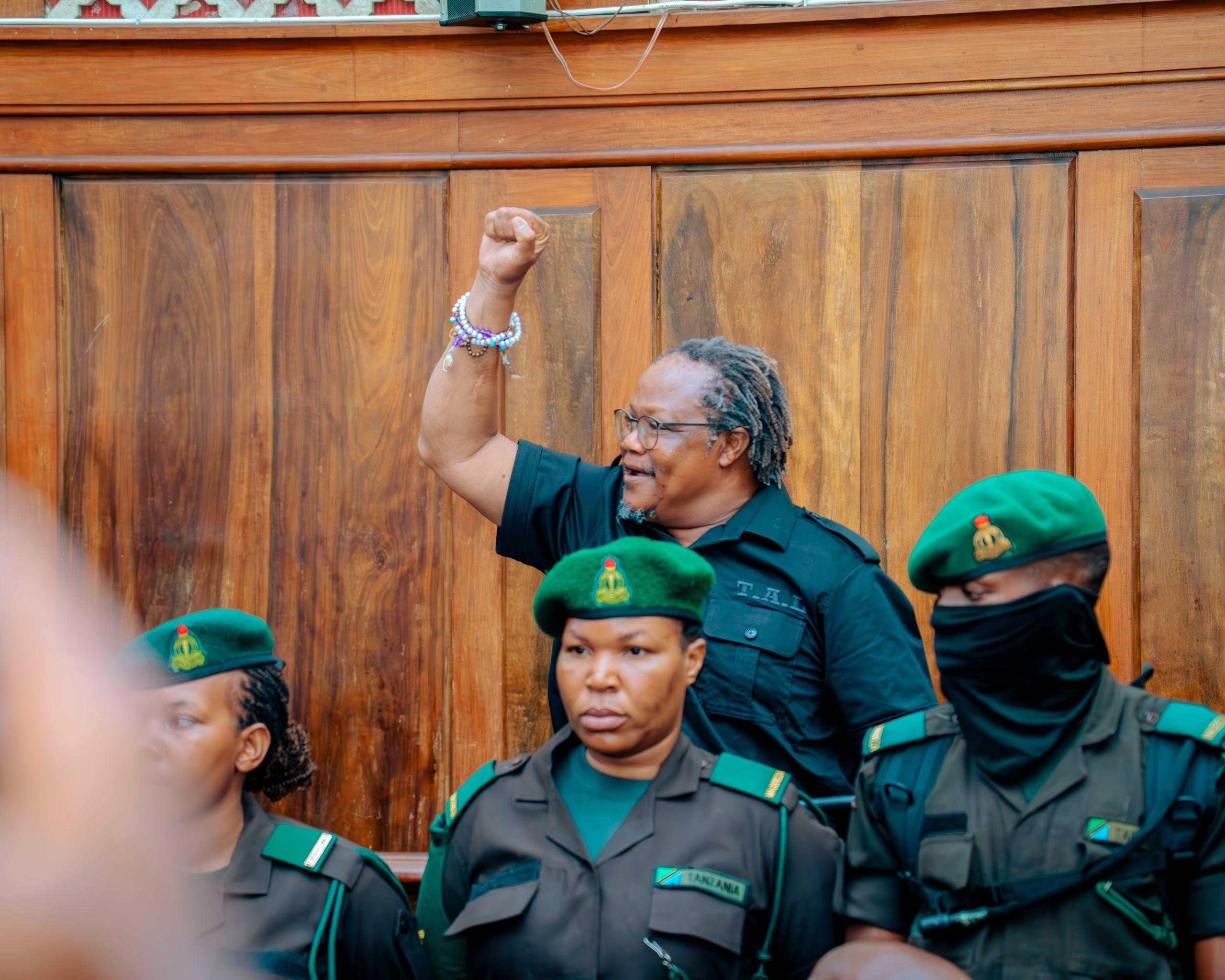
A Tanzanian court on Friday sentenced opposition leader Tundu Lissu to four years in jail for incitement, hours after clearing him of treason in a high-profile trial that had drawn international condemnation.
Lissu, the chairperson of Tanzania’s main opposition party CHADEMA, had faced treason charges — which carry a potential death penalty — over remarks he made during his party’s “No Reforms, No Election” campaign ahead of the October 2025 General Election.
Acquitted of Treason, Convicted of Incitement
A three-judge panel sitting at the High Court’s Dar es Salaam Sub-Registry, led by Justice Dunstan Ndunguru alongside Justices James Karayemaha and Ferdinand Kiwonde, delivered the verdict on Friday, November 6, 2026.
The court ruled that the prosecution had failed to prove a key element of treason — that Lissu intended to intimidate the government.
However, the judges found him guilty of the lesser offence of incitement under Section 390 of the Penal Code, an alternative offence to the original charge.
Reading the judgment, Justice Ndunguru said Section 319 of the Criminal Procedure Act empowers a court to convict an accused person of a lesser offence, even if it was not separately included in the charge sheet.
“We are satisfied that through his statements, the accused intended to disrupt elections and instigate violence,” the court said.
The judges noted that some prosecution witnesses had testified that Lissu’s remarks had influenced them to participate in activities aimed at disrupting the election.
What Was He Accused Of?
Lissu was arrested on April 9, 2025, in Mbinga, in the southern Ruvuma Region, shortly after addressing supporters during the electoral reform campaign.
Prosecutors said that in a speech on April 3, 2025, at CHADEMA’s national headquarters in Dar es Salaam, he told supporters that the opposition would “block the election” and “mobilise rebellion” if electoral reforms were not implemented.
The treason charge was brought under Section 39(2)(d) of Tanzania’s Penal Code, relating to allegedly forming an intention to threaten or intimidate the government.
Lissu pleaded not guilty, maintaining that his statements were part of a legitimate political campaign demanding electoral reforms and that the charges were politically motivated.
He has been held in custody since April 2025, which prevented him from participating freely in political activities leading up to the October 2025 election.
A Trial That Sparked Unrest
Lissu’s arrest, along with alleged abductions of government critics and CHADEMA’s disqualification from the vote, was a key driver of protests that broke out during last year’s elections.
President Samia Suluhu Hassan’s government carried out a wave of arrests targeting opponents and critics ahead of the vote, sparking huge protests during the election.
It was the third high-profile treason trial in mainland Tanzania’s history, and the first time the 58-year-old activist faced such serious charges, despite repeated arrests over his opposition to the government.
The prosecution presented 17 witnesses before closing its case in August 2026.
While held on remand at Ukonga Prison in Dar es Salaam, Lissu twice went on a brief hunger strike, saying he had been denied access to his lawyers and relatives.
What Next?
By acquitting him of treason, the court spared Lissu the death penalty — the most severe punishment available under Tanzanian law.
The incitement conviction carried a maximum sentence of five years in prison or a fine. The court imposed four years.
Lissu has leave to appeal against the conviction at the Court of Appeal, the country’s highest court. His legal team has already indicated that an appeal is planned, arguing that the prosecution was politically motivated and that his comments were protected under Tanzania’s constitutional guarantees of free speech.